Historic Movements in Silver: From Ancient Coins to Modern MarketsHistoric Movements in Silver: From Ancient Coins to Modern Markets
Silver has fascinated humanity for thousands of years. Its lustrous appeal, practical utility, and intrinsic value have made it more than just a precious metal—it has been a symbol of wealth, a medium of trade, and a hedge against economic uncertainty. Understanding the historic movements in silver reveals not only the story of the metal itself but also the broader economic, political, and social trends that have shaped human history.
Ancient Beginnings
Silver’s story begins in antiquity. As early as 3000 BCE, silver was being mined in Anatolia (modern-day Turkey) and traded across Mesopotamia. Unlike gold, which was often reserved for ceremonial or royal purposes, silver became the metal of commerce, used in coins, jewelry, and trade. By 600 BCE, the Lydians—inhabitants of what is now western Turkey—were minting the world’s first silver coins. This innovation revolutionized trade, creating a standardized form of currency that could be easily exchanged and trusted.
In classical civilizations like Greece and Rome, silver coins were a cornerstone of economic life. Greek drachmas and Roman denarii circulated widely, facilitating trade and tax collection. Fluctuations in silver production—due to new mining techniques, wars, or resource depletion—had direct consequences on economies, sometimes triggering inflation or deflation.
The Silver Boom of the Middle Ages
Fast forward to the medieval period, and silver continues to play a critical role. European economies relied heavily on silver coinage, while the discovery of vast silver deposits in places like Saxony, Bohemia, and later the Americas, dramatically influenced global trade. The 16th century saw a particularly dramatic silver boom with the discovery of rich silver mines in Potosí (modern-day Bolivia) and Zacatecas (Mexico). These mines, largely exploited by Spanish colonial powers, flooded Europe and Asia with silver, reshaping global commerce.
The influx of New World silver fueled trade with China, which had a high demand for the metal due to its monetary system. This period illustrates a critical lesson: historic movements in silver often coincide with geopolitical shifts, connecting continents and economies in unexpected ways.
Industrial Age and Silver Investment
By the 19th century, silver had acquired new significance. The Industrial Revolution created demand for silver in photography, medicine, and later, electronics. Meanwhile, nations like the United States adopted bimetallic standards, pegging currency to both gold and silver. Movements in silver prices became closely linked to monetary policy and mining output, illustrating the metal’s dual identity as both an industrial commodity and a financial asset.
The late 19th century also saw dramatic silver price movements during the Free Silver Movement in the United States. Advocates pushed for the unlimited coinage of silver to inflate currency and aid indebted farmers. While politically contentious, this movement highlights how silver’s value extends beyond markets—it can drive social and political debates.
Modern Markets and Global Trends
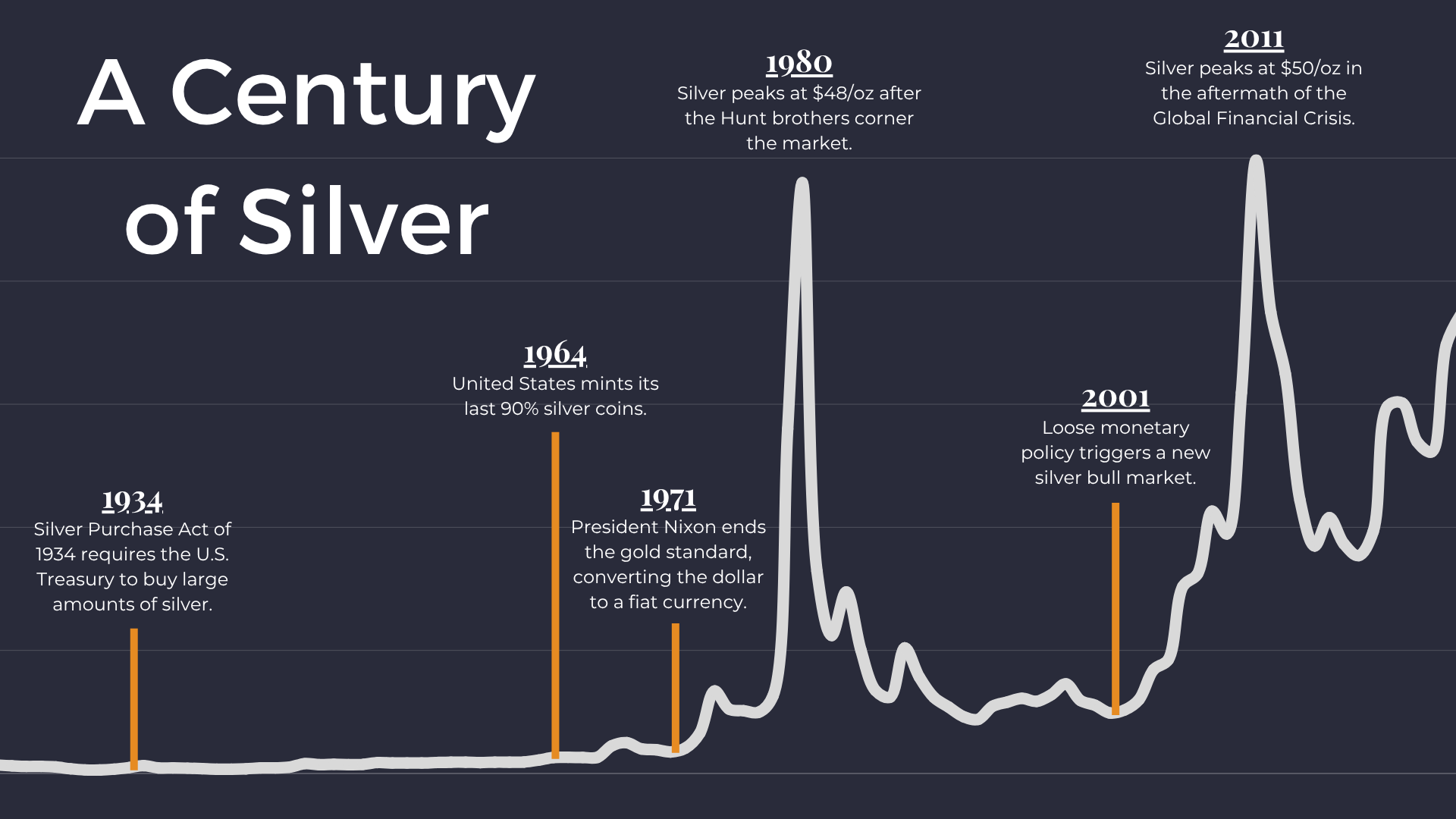
Today, silver remains a key player in both investment and industry. Its price movements are influenced by global economic trends, inflation fears, technological demand, and mining production. Investors view silver not only as a commodity but also as a hedge against market uncertainty, often dubbed “poor man’s gold.” Historic price surges, such as during the Hunt Brothers’ attempt to corner the silver market in 1980, demonstrate how market manipulation, speculation, and global events can create dramatic swings.
From ancient coins to modern futures markets, silver’s historic movements reflect humanity’s evolving relationship with money, trade, and technology. Its story is a fascinating intersection of economics, politics, and culture, offering lessons that remain relevant in today’s complex global economy.
Whether you’re a history enthusiast, investor, or simply curious about precious metals, exploring silver’s journey offers a window into the forces that shape both markets and societies—a journey as enduring and luminous as the metal itself.